Does haiku have to be 5–7–5?
A 5–7–5 haiku has five syllables in the first line, seven in the second, and five in the third. Many English-language haiku use fewer syllables. Compare both approaches in this chapter.
What the 5–7–5 pattern does
A set syllable count gives you a specific editing task. For example, to shorten a six-syllable line to five, look for a word you can remove without losing an important detail.
Contemporary English-language haiku are also often shorter or use different rhythms. Japanese haiku count sound units called on, which do not correspond neatly to English syllables.
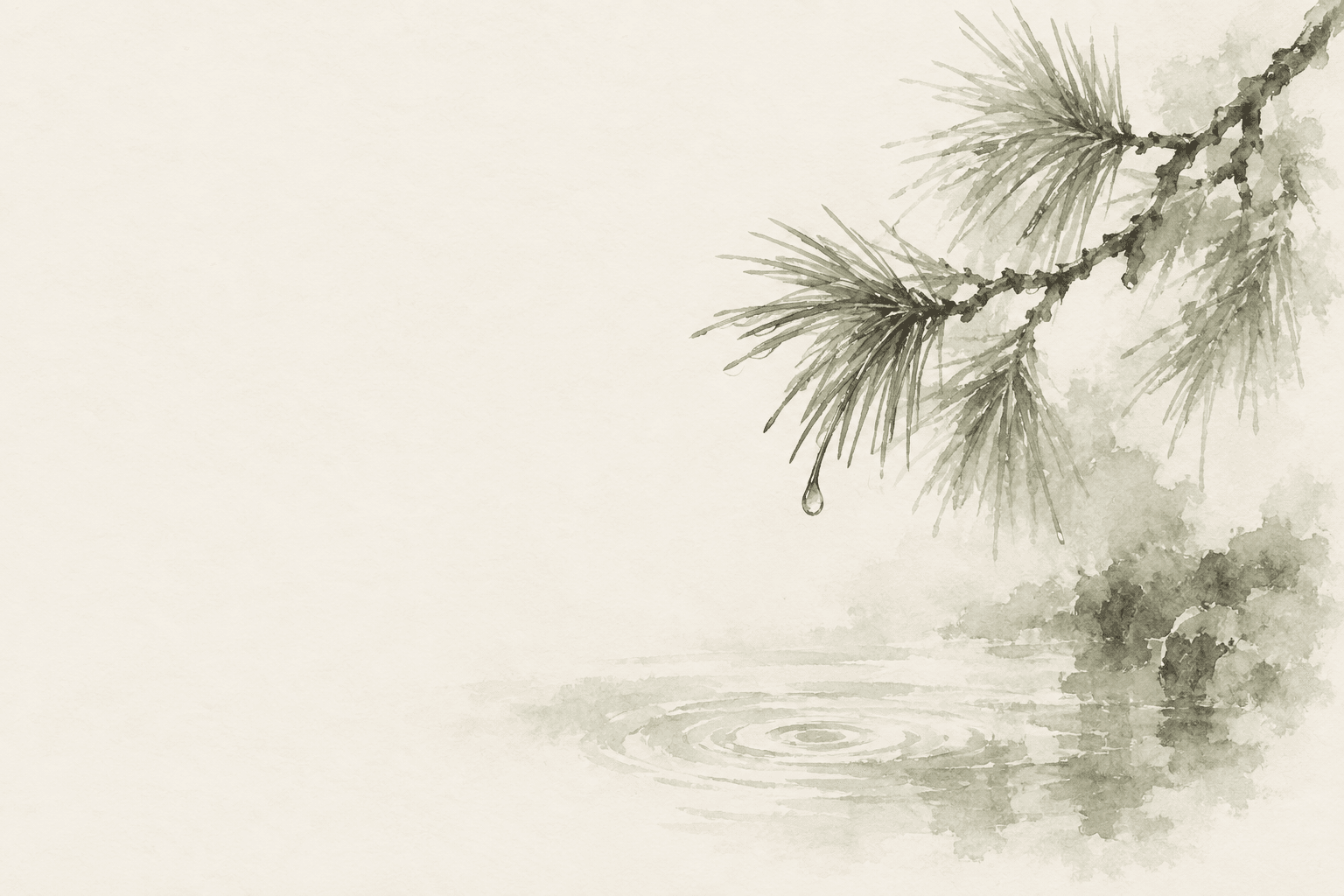
Rain has stopped. One drop hangs from a pine needle, then falls into the pond. The haiku keeps only the clearest details.
rain on the pine branch—one drop at the needle’s tipfalls into the pond
The first line describes rain on a branch. The seven-syllable middle line describes a hanging drop, and the five-syllable last line describes it falling. Read aloud and count each syllable using the dots.
5rain on the pine branch—7one drop at the needle’s tip5falls into the pond
Compare the examples
One crow, two rhythms
Compare two translations of the same Bashō poem. Select each version and read it aloud.
On a withered twig,5Lo, the crow is sitting there,7Oh, this Autumn eve!5
“Lo” and “Oh” add emphasis and syllables. This translation describes the twig, crow, and autumn evening in five, seven, and five syllables.
Editing exercise
Remove unnecessary adjectives
Select an adjective to remove or restore it. Compare the syllable count and check whether the word adds useful information.
the cold rain on the glass6a small moth rests beside the lamp8its wet wings slowly dry6
6–8–6. The draft begins at six, eight, six. Explore each word before deciding what to keep.
Removing all three adjectives gives 5–7–5. Keep an adjective if it adds an important detail, even if that changes the count.
Use the count as guidance
Read the poem aloud and count the syllables as you pronounce them. Then check the description. “A small moth” has three syllables, while “a moth” has two. Keep “small” if its size matters; remove it if the shorter phrase says enough.
Compare the examples
Compare a longer and shorter draft
Both drafts describe rain, a lamp, and a moth drying its wings. Compare what changes when we use fewer words.
rain beads on the glass5a moth rests beside the lamp7its wings slowly dry5
Each line describes a different detail: rain on glass, the moth’s position, then its drying wings. “Slowly” tells us how long the drying takes.
Examine the details
What does each detail tell us?
Before cutting words to fit a syllable count, check what they tell the reader. Select a detail to see its role in this poem.
after the rain—one snail on the gatefollows a crack
Select a detail to see what it tells the reader.
Try two versions
Write three lines about something close by. Try shaping them into five, seven, and five syllables, then make a second version using as few words as you can.
Read both aloud. Check whether either version includes words added only to reach a syllable count. Keep the version that describes the scene clearly and sounds natural.
Use the syllable count to help you revise, and check that each word adds something useful. Next, learn how season words work.