What is kigo?
A kigo is a word or phrase associated with a season. For example, “cherry blossoms” suggests spring and “first snow” suggests winter. It tells the reader when the scene takes place without naming a month.
What a season word tells the reader
A kigo is a seasonal word or phrase. It may name weather, plants, animals, customs, food, or other details associated with a time of year.
“First frost” tells us that the weather has become cold enough for frost. The word “first” also tells us this is a change from earlier days. One phrase provides both pieces of information.
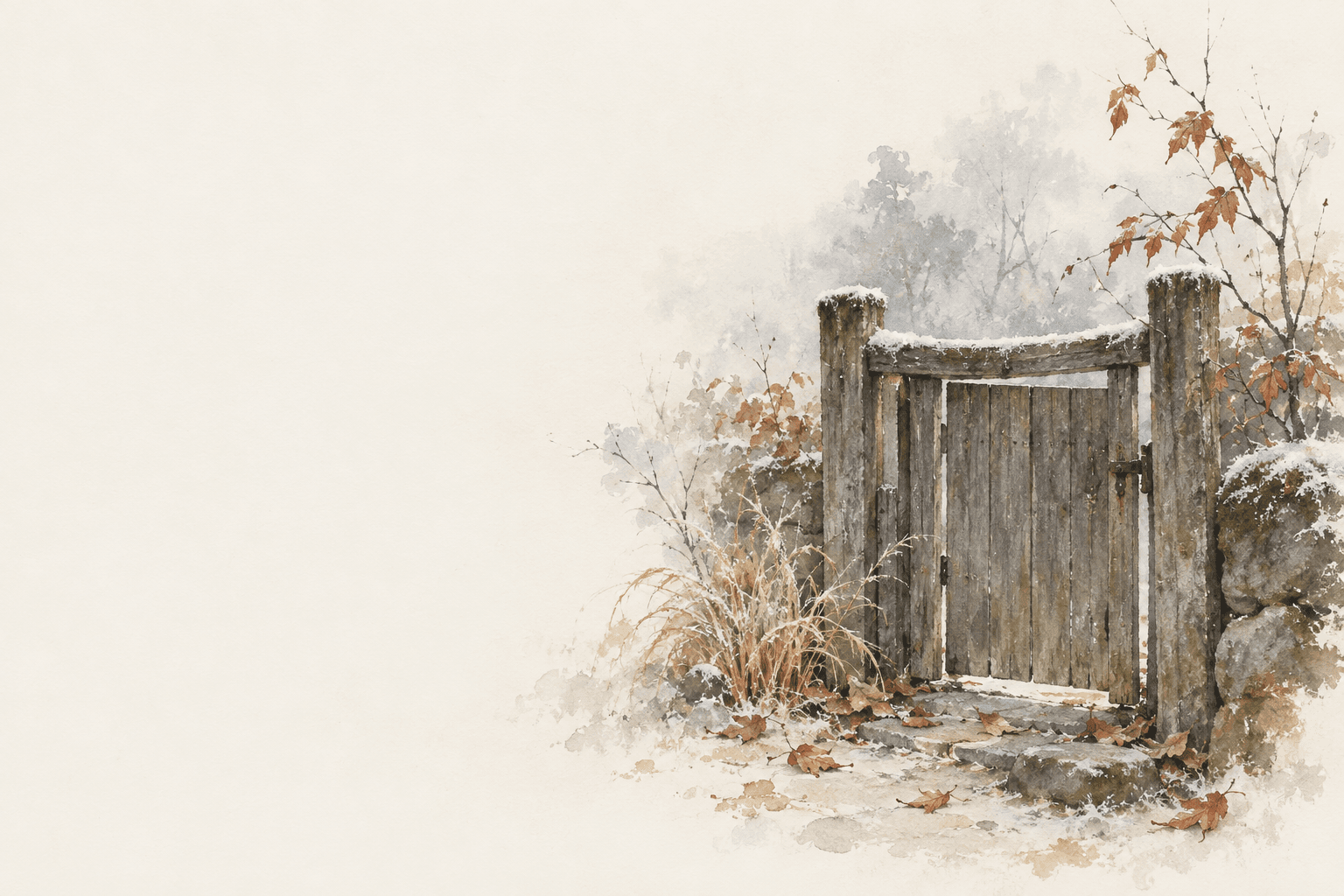
The first frost has settled on a garden gate. A cat slips through the gap beneath it. The haiku keeps only the clearest details.
first frost on the gate—a cat slips throughwithout a sound
“First frost” suggests the start of winter in the traditional seasonal calendar. It tells us about the weather on the morning when the cat passes under the gate.
5first frost on the gate—4a cat slips through4without a sound
Compare the examples
Change only the season word
Each version keeps the same bench and person. Select a season to change the first line and compare the setting.
cherry blossoms—on the empty benchI leave room
“Cherry blossoms” suggests spring. The person leaves room on the bench, perhaps for someone they expect to join them. The poem does not tell us who.
Published example
Find the seasonal reference
Autumn's full moon:Lo, the shadows of a pine treeUpon the mats!
How does the poem connect the moon outside with the room inside?
Read an explanation
Moonlight casts the pine’s shadow onto the floor mats. This connects an object outside with a detail inside the room.
The description moves from the moon to the pine and then the mats. It shows the effect of moonlight on a specific place.
Use a detail from the place you observed
Traditional haiku use kigo, although some modern haiku omit them. Use a detail from your observation. If you saw frost on a gate, describe that instead of adding an unrelated seasonal flower.
Traditional Japanese season words follow a shared calendar. Seasonal events happen at different times in different climates. Check that a reference to blossoms, rain, or migrating birds fits the place you are describing.
Compare the examples
Food, objects, and customs can suggest seasons
A seasonal detail can be something we eat, use, or do. It need not be a flower or a landscape.
ice cream stand—my father takesthe smaller scoop
“Ice cream” suggests summer. The father takes a smaller scoop, but the poem does not say why. He might be less hungry or leaving more for someone else.
Examine the details
Nature is not always a season word
Which detail places this scene in a particular time of year? Explore the three images before deciding.
first snow—the sparrow’s tracksend at the wall
Select a detail to see what it tells the reader.
Choose a seasonal detail
Look for a detail that belongs to this time of year where you live. It might be a plant, a food, a sound, or a change in someone’s daily routine.
Use that detail with a small action. For example, describe a person brushing fallen leaves off a bench. Check whether a reader can identify the season without the word “autumn”.
Choose a seasonal detail that fits the scene you observed. Next, learn how a cut separates two parts of a haiku.